
Palmetto Crest Appliance Repair
SPARTANBURG, SOUTH CAROLINA
Appliance Repair in Spartanburg, SC
Refrigerator not cooling? Dryer taking too long? Get help finding the right repair solution for household appliances in Spartanburg and nearby communities.
An appliance rarely fails at a convenient time. A warm refrigerator, a washer full of standing water or an oven that will not heat all raise the same question: is this a quick fix, a bigger repair, or the end of the appliance’s useful life?
Palmetto Crest Appliance Repair is built around answering that question honestly, one appliance at a time.
Ready to talk about a problem appliance? Visit the contact page to request service, and have the model number and a short description of the symptom ready.
Phone: (864) 310-7300
What Appliances Does Palmetto Crest Appliance Repair Service?
Palmetto Crest Appliance Repair services a defined set of household appliances, and each one has its own page below:
- Refrigerators
- Freezers
- Ice makers
- Refrigerator water filters
- Washing machines and dryers
- Dryers
- Dishwashers
- Ovens
- Stoves
- Cooktops
- Convection microwaves
- Range hoods
- Trash compactors
- General appliance repair for household problems that do not fit neatly into one category
Appliance Repair Services in Spartanburg: Find Your Appliance
Each tile below names the systems usually involved in a problem and links to the full service page. Together they make up the Spartanburg appliance repair service list.
-
Refrigerator Repair
Cooling, defrost, leaks and dispensers — top-freezer to French-door.
-
Freezer Repair
Chest and upright freezers that won’t hold temperature.
-
Ice Maker Repair
Water supply, freezing and harvest-cycle problems.
-
Water Filter Repair
Slow flow, leaks and dispenser issues after a filter change.
-
Washing Machine & Dryer Repair
Drain, spin, leak and door problems — pairs and stacked units too.
-
Dryer Repair
No heat, slow drying and tumbling problems.
-
Dishwasher Repair
Cleaning, draining, latching and leaking problems.
-
Oven Repair
Heating, temperature accuracy, doors and controls.
-
Stove Repair
Sorting out whether the cooktop or oven side is at fault.
-
Cooktop Repair
Burners, elements, switches and ignition.
-
Convection Microwave Repair
Microwave heating and fan-driven convection problems.
-
Range Hood Repair
Weak airflow, noise and dead controls.
-
Trash Compactor Repair
Rams that won’t move and drawers that won’t close.
-
General Appliance Repair
Not sure which system is at fault? Start here.
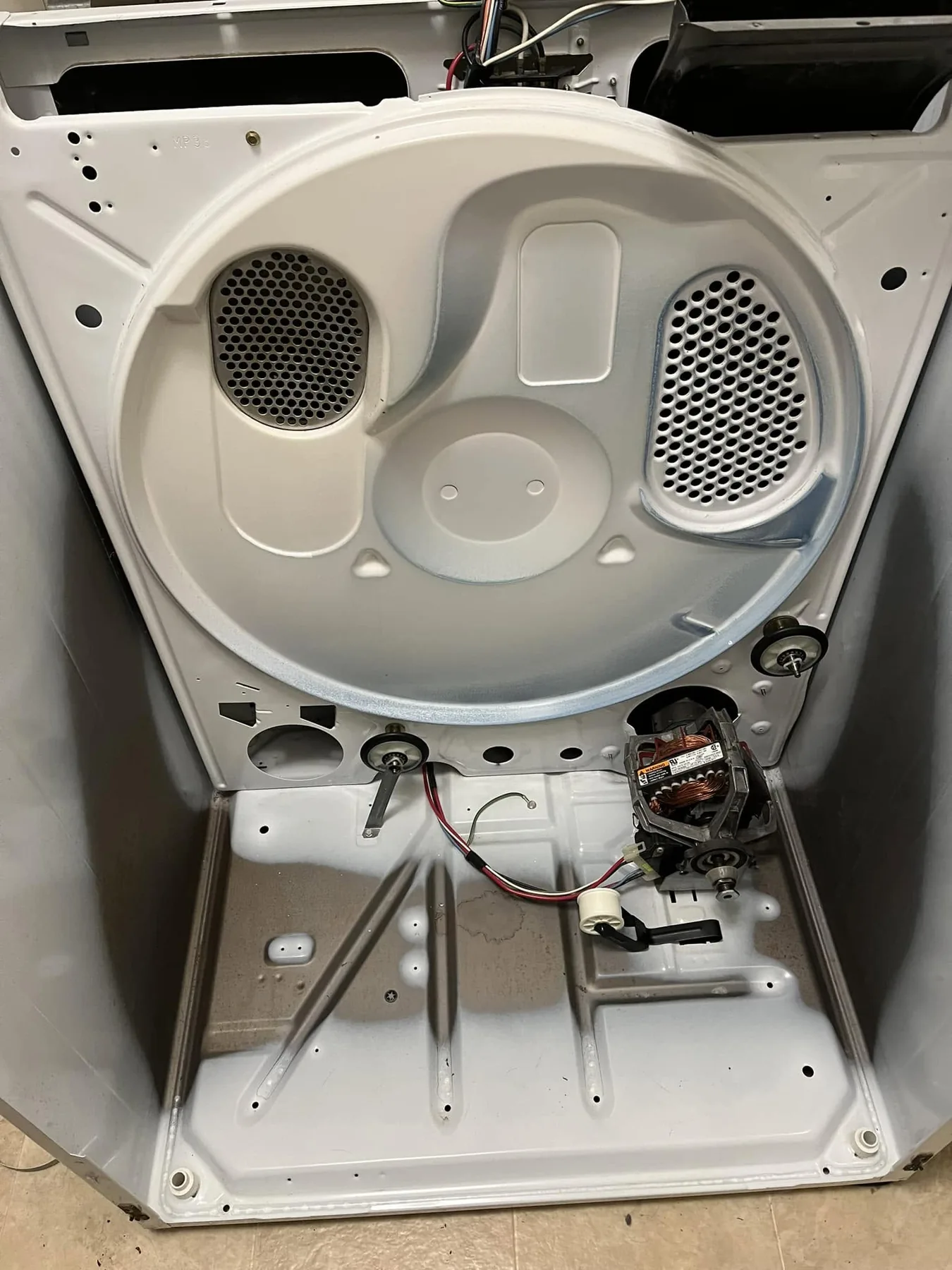
Different appliances involve different systems inside the cabinet
Airflow, heat, wiring and moving parts each behave differently depending on the appliance. That is why the right service page and a clear symptom description matter.
Dryers, ovens, refrigerators and dishwashers can all look normal from the outside while hiding very different internal causes.
Photo example: opened dryer cabinet and internal blower assembly.
What Appliance Problems Can Lead to a Repair Visit?
Most repair requests begin with a plain-language symptom, not a part name. This table groups common symptoms by appliance system.
| Appliance | Common symptom | Systems that may be involved |
|---|---|---|
| Refrigerator | Not cooling, warm inside | Cooling system, condenser or evaporator fan, defrost system, temperature sensor, control board |
| Refrigerator | Water on the floor | Water supply line, water inlet valve, filter housing, defrost drain |
| Freezer | Food softening or frost buildup | Cooling system, door seal, defrost system, airflow |
| Ice maker | Little or no ice | Water supply, freezing temperature, harvest cycle, inlet valve |
| Washing machine | Will not drain | Drain filter, drain hose, drain pump, control board |
| Washing machine | Will not spin | Load balance, door lock, motor, drive system, control board |
| Dryer | Runs but clothes stay damp | Airflow, venting, heating system, sensors |
| Dishwasher | Standing water or dirty dishes | Drainage, circulation pump, spray arms, inlet valve |
| Oven | Will not heat or heats unevenly | Heating system, temperature sensor, control board |
| Cooktop | Burner will not light or heat | Ignition, switch, element, control |
| Convection microwave | Does not heat or fan is silent | Heating function, convection fan, door switch |
| Range hood | Weak suction or loud fan | Fan, motor, airflow path, switch |
| Trash compactor | Ram will not move | Motor, drive system, safety switch |
The table is a map of possibilities, not a diagnosis. Use it to find the right dedicated page.
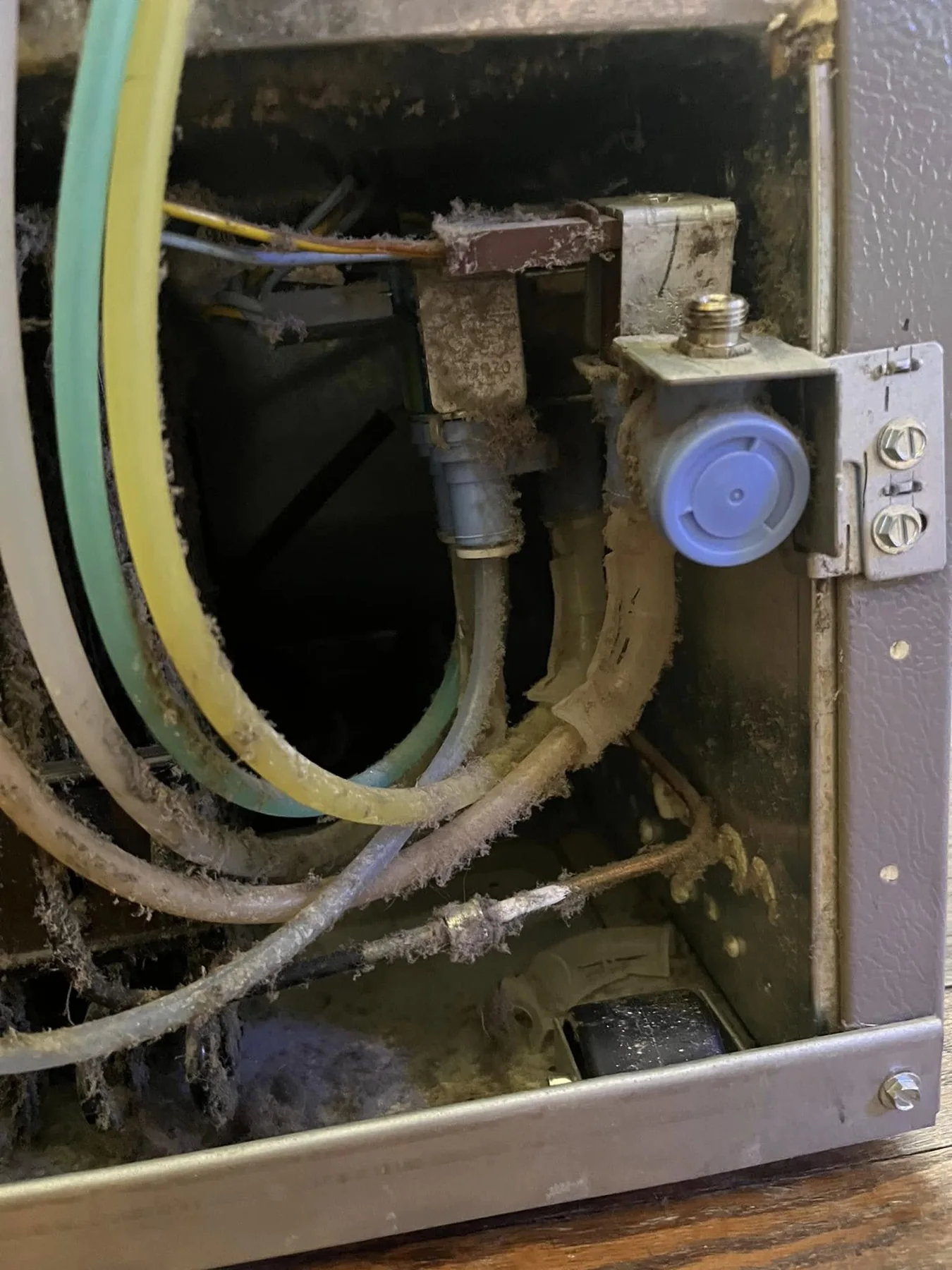
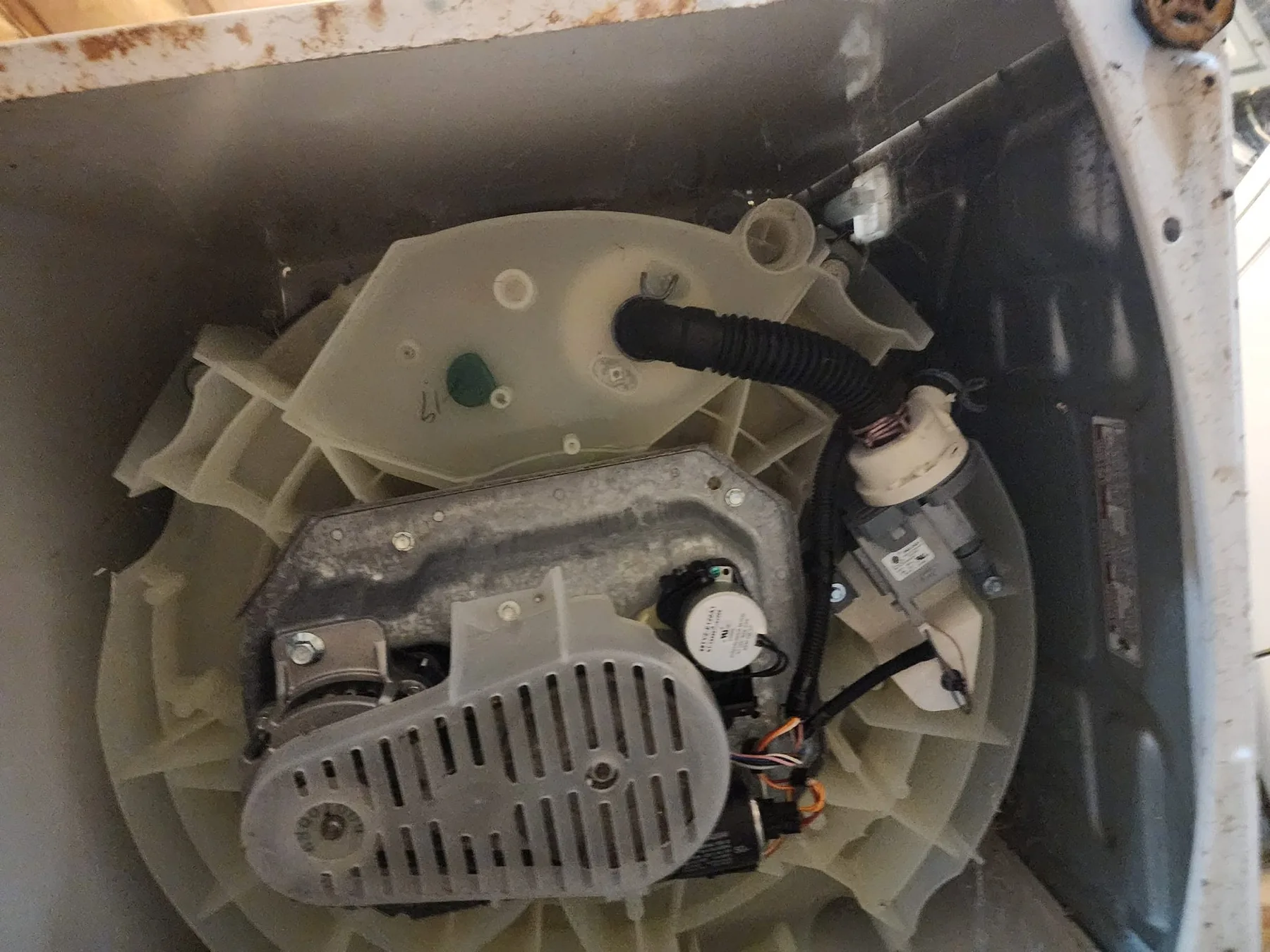
Leaks, poor water flow and ice-maker issues often start in the water system
Valves, supply lines and related components can be part of a refrigerator, ice maker or other water-fed appliance problem. The visible part is only one clue.
Photo example: appliance water valve and tubing.
Why Can the Same Appliance Symptom Have More Than One Cause?
Modern appliances are systems, not single parts. Water, air, heat, electricity and software all interact, so a failure in one area often shows up somewhere else. A symptom is never proof of a specific failed part.
A refrigerator that is warm inside
A sealed cooling system, a fan that is not moving air, a defrost problem that has iced over the coil, a faulty temperature sensor or a door that is not sealing can all produce the same warm compartment. Only inspection and testing separate these causes.
A washer that will not spin
An unbalanced load, a door lock that has not engaged, a drain problem that leaves water in the tub, a worn drive component or a control fault can all stop a spin cycle. Some are simple. Others are not.
An oven that will not heat
The heating system, a sensor reporting the wrong temperature, a control fault or a setting such as a lockout mode may all be involved.
A dishwasher that leaves dishes dirty
Blocked spray arms, low water fill, a circulation problem, a clogged filter or the way the dishwasher was loaded can produce the same complaint.
The practical takeaway: describe the symptom and the conditions around it, and let diagnosis identify the cause before anyone talks about a replacement part.
How Does Appliance Diagnosis Guide the Repair Decision?
Diagnosis is the step between a symptom and a decision. It answers what is wrong, whether it is worth fixing and what to do next.
- Listen to the symptom. What do you see, hear or smell, and when does it happen?
- Confirm the basics. Power, water supply, settings, filters and door or lid engagement come first.
- Read the appliance. Error codes, display behavior and the model number narrow the possibilities.
- Test the relevant systems. Depending on the appliance, that means the heating system, cooling system, water system, drainage, airflow, motor, pump, fan, sensor or control board.
- Separate cause from effect. One failed component can make others appear faulty.
- Explain the options. Repair, monitoring or replacement are laid out with the reasoning behind them.
The full walkthrough of how a visit is handled is on the Service Process page.
Describe the Symptom. We’ll Handle the Diagnosis.
A clear description of what your appliance is doing is the fastest way to a reliable repair decision. Tell us the appliance, the model number and the symptom, and Palmetto Crest Appliance Repair will take it from there.
What Information Helps Before an Appliance Repair Visit?
Good information saves time and helps a technician understand the problem.
- Appliance type and configuration, such as top-load washer or French-door refrigerator
- Brand, model number and serial number, usually on a label inside a door, on a frame edge or on the back panel
- Approximate age of the appliance, if you know it
- A clear description of the symptom in your own words
- When the problem started and whether it happens every time or only sometimes
- Any error code or blinking light pattern on the display
- What has already been tried, such as resetting or cleaning a filter
- Any leaks, burning smells, unusual sounds or tripped breakers
- Photos or a short video of the problem, if easy to capture
- Clear, safe access to the appliance
The model and serial numbers matter most. They identify the exact appliance, which helps when considering a replacement part or known model-specific behavior. The Brands page shows where to find them.
Which Appliance Symptoms Should You Note Carefully?
Precise observations shorten the path to a diagnosis. Compare these descriptions.
| Vague description | More useful description |
|---|---|
| “The fridge is broken.” | “The freezer is cold, but the refrigerator side is warm, and it started two days ago.” |
| “The washer will not work.” | “The washer fills, then stops with water in the tub and shows an error code.” |
| “The oven is off.” | “The oven display lights up, but the oven never gets hot.” |
| “The dishwasher leaks.” | “Water appears at the front bottom edge during the wash cycle.” |
| “The dryer is bad.” | “The dryer runs, but towels are still damp after a full cycle.” |
What Can You Check Safely Before Calling?
A few low-risk checks can rule out simple causes and give you better information to share.
| Appliance | Simple homeowner check |
|---|---|
| Any appliance | Is it plugged in, and is the outlet or breaker working? |
| Refrigerator | Are the vents inside clear, and does the door close fully? |
| Washer | Is the load evenly spread, and is the drain filter or hose kinked or blocked? |
| Dryer | Is the lint screen clean and is the vent path unobstructed? |
| Dishwasher | Is the filter clean and are spray arms free to turn? |
| Oven or cooktop | Are controls in the right mode, and is any control lock turned off? |
| Range hood | Is the filter clean and the switch set correctly? |
| Water filter | Is it seated correctly, and is the water supply valve open? |
Stop if a check requires removing panels, working near live electrical parts, handling gas connections or moving a heavy appliance. Those steps belong to a qualified technician.
When Can an Appliance Problem Become a Safety Concern?
Some symptoms are inconvenient. Others call for immediate caution. When in doubt, stop using the appliance.
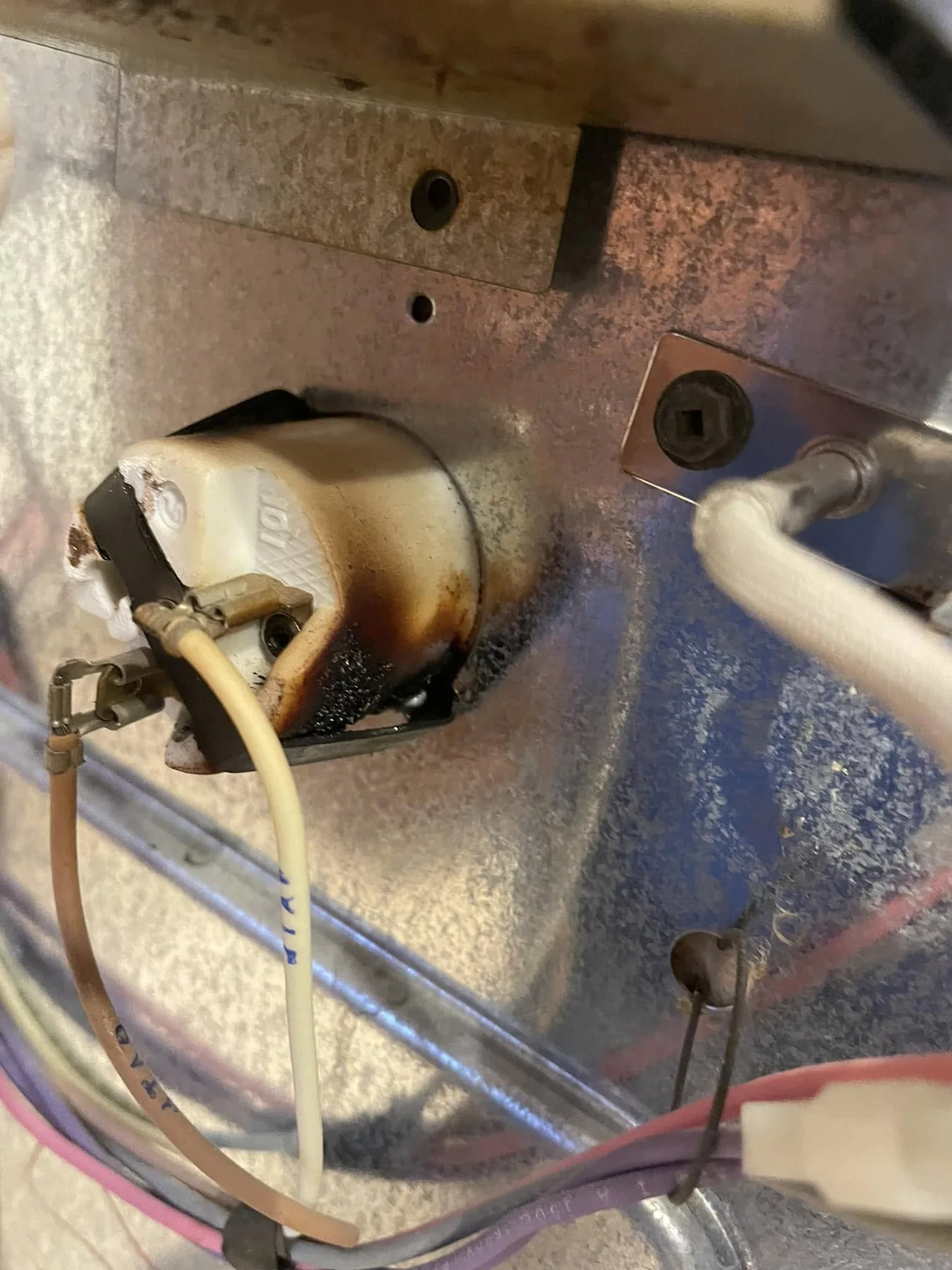
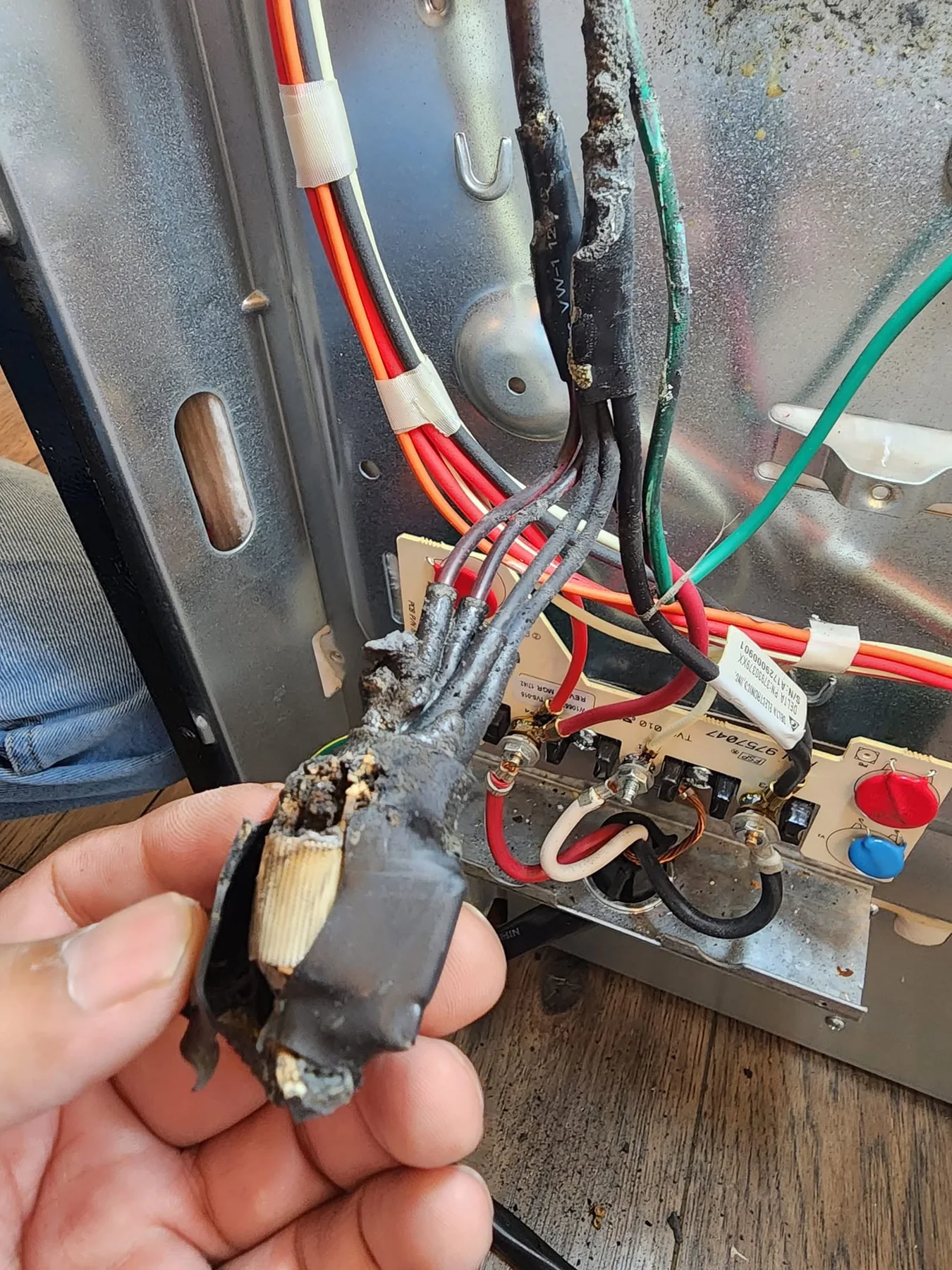
- Burning smell, smoke, sparks or scorched wiring: Turn the appliance off, unplug it if it is safe to do so, and do not restart it.
- Gas smell near a stove, cooktop or oven: Leave the area right away and contact your gas utility or emergency services from a safe place. Do not operate switches or open flames.
- Water pooling near electrical outlets or the power cord: Avoid touching the appliance and cut power at the breaker if you can do so safely.
- A dryer that becomes unusually hot or has a hot smell: Stop using it until it has been inspected.
- A door, lid or safety switch that has been bypassed: Do not use the appliance that way.
- A refrigerator or freezer that has stopped cooling: Keep doors closed, watch food temperatures and discard perishable food that has been too warm for too long, following current food-safety guidance.
Household appliances combine electricity, heat, water, gas and moving parts. Do not attempt repairs that go beyond simple, safe checks.
Should You Repair or Replace? a Problem Appliance?
The answer depends on the problem, the appliance’s age and condition, parts availability, and how the repair compares with replacement. A diagnosis provides the information needed to make that decision.
| Factor | Points toward repair | Points toward replacement |
|---|---|---|
| Age | Relatively young appliance | Near or beyond typical lifespan |
| Problem type | Single, well-defined issue | Multiple failures appearing together |
| Part availability | A replacement part is available for the model | Parts are difficult to find |
| Repair cost | Modest compared with a new appliance | A large share of replacement price |
| History | Few prior repairs | Repeated repairs in recent time |
| Fit for your home | Appliance still meets your needs | Appliance no longer fits your household |
| Safety | Issue is fixable and safe afterward | Damage or ongoing safety concern |
No single formula suits every household. For a detailed framework, read Repair or Replace?.
How Do Appliance Systems Fail Differently Across the Home?
Most household appliances rely on some combination of the systems below. Knowing them helps you describe a problem accurately.
Cooling system and temperature control
Refrigerators and freezers move heat out of a sealed space. The cooling system depends on a compressor, coils, fans, a defrost cycle and temperature control through sensors and a thermostat or control board. If any link weakens, the result may be warm food, frost or constant running.
Heating system and ignition
Ovens, stoves, cooktops, dryers and convection microwaves create heat in different ways. Electric models use elements. Gas models use a burner and ignition system. A heating problem can also be a sensor, switch or control issue rather than the heat source itself.
Water system and drainage
Washers, dishwashers, refrigerator dispensers, ice makers and water filters depend on a water system: supply, inlet valves, hoses, pumps and drainage. Leaks, slow fill, standing water and weak flow all belong to this family.
Airflow, fans and motors
Dryers, range hoods, refrigerators and convection ovens need airflow. A fan or motor that slows, a blocked vent path or a dirty filter can change performance without any part being broken.
Controls, switches and sensors
Almost every modern appliance has a control board, sensors and switches that tell the machine what to do. These can fail, but they are also blamed unfairly when the real problem is elsewhere. That is one more reason diagnosis comes before parts.
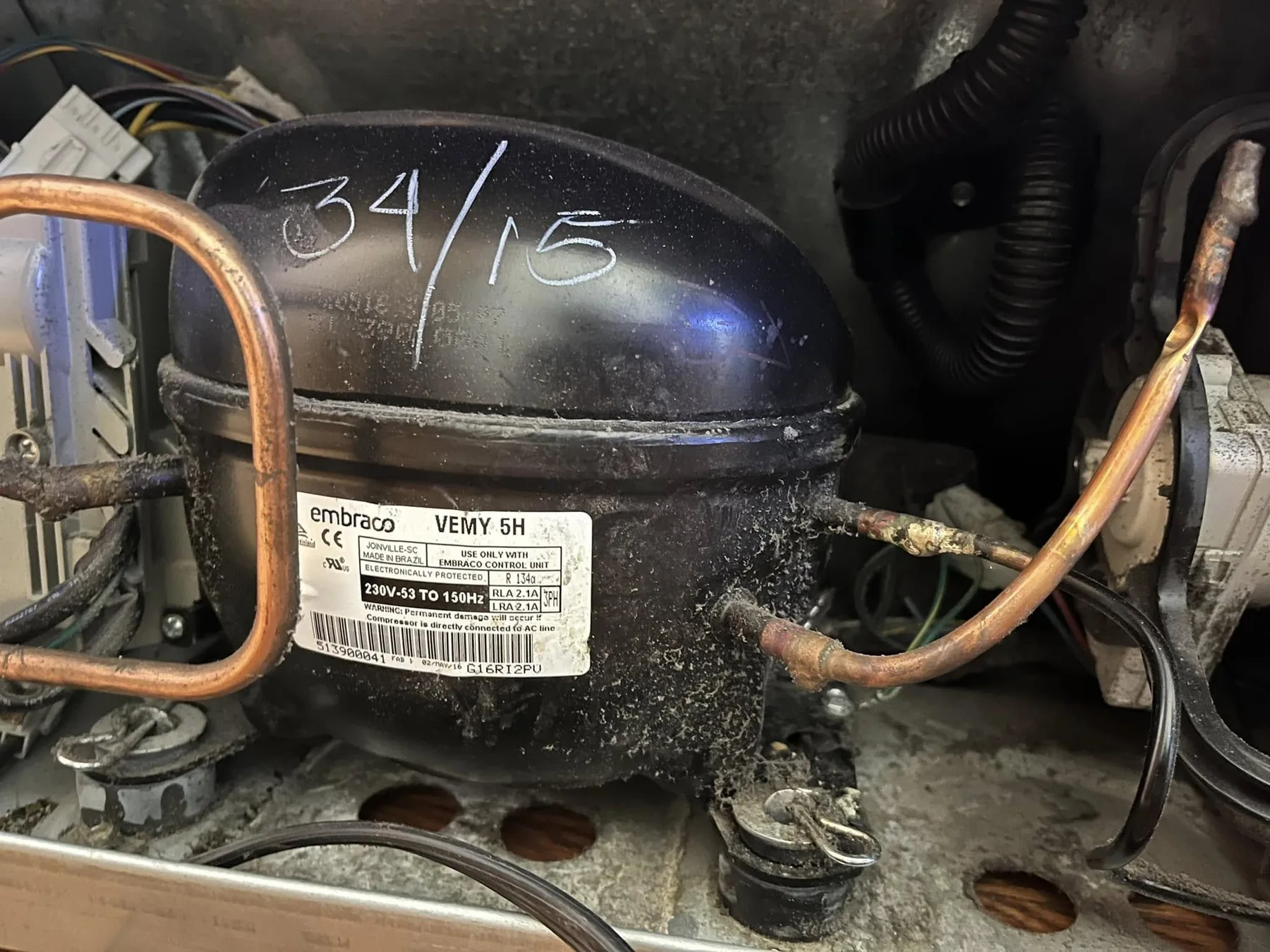
Refrigerator and freezer problems often trace back to the lower rear cooling area
Compressors, fans and related cooling components all work together. A warm compartment does not automatically mean one exact part has failed.
Photo example: rear cooling-area view of a refrigerator.
What Are the Warning Signs That an Appliance Needs Attention Soon?
Early attention may prevent a bigger problem. Any one of these can have a simple explanation, but together or repeated they are worth investigating.
- New or louder noises during normal operation
- Cycles that take noticeably longer than usual
- Food that spoils faster than expected
- Ice or frost that appears where it did not before
- Small puddles or damp spots near an appliance
- A breaker that trips when the appliance runs
- Error codes that keep returning after a reset
- Uneven cooking or heating
- Dishes or laundry that come out less clean than usual
How Does Regular Maintenance Reduce Appliance Problems?
Maintenance will not prevent every failure, but simple habits reduce avoidable problems.
- Keep refrigerator door seals clean and check that doors close fully.
- Change refrigerator water filters according to the manufacturer’s guidance.
- Clear the dryer lint screen after every load and keep the vent path free of obstructions.
- Clean washer drain filters and door seals on the schedule your manual suggests.
- Clean dishwasher filters and check spray arms for blockages.
- Keep range hood filters clean.
- Avoid overloading washers, dryers and dishwashers, and leave space around appliances so air can move.
If routine cleaning does not solve a problem, mention it when you get in touch.
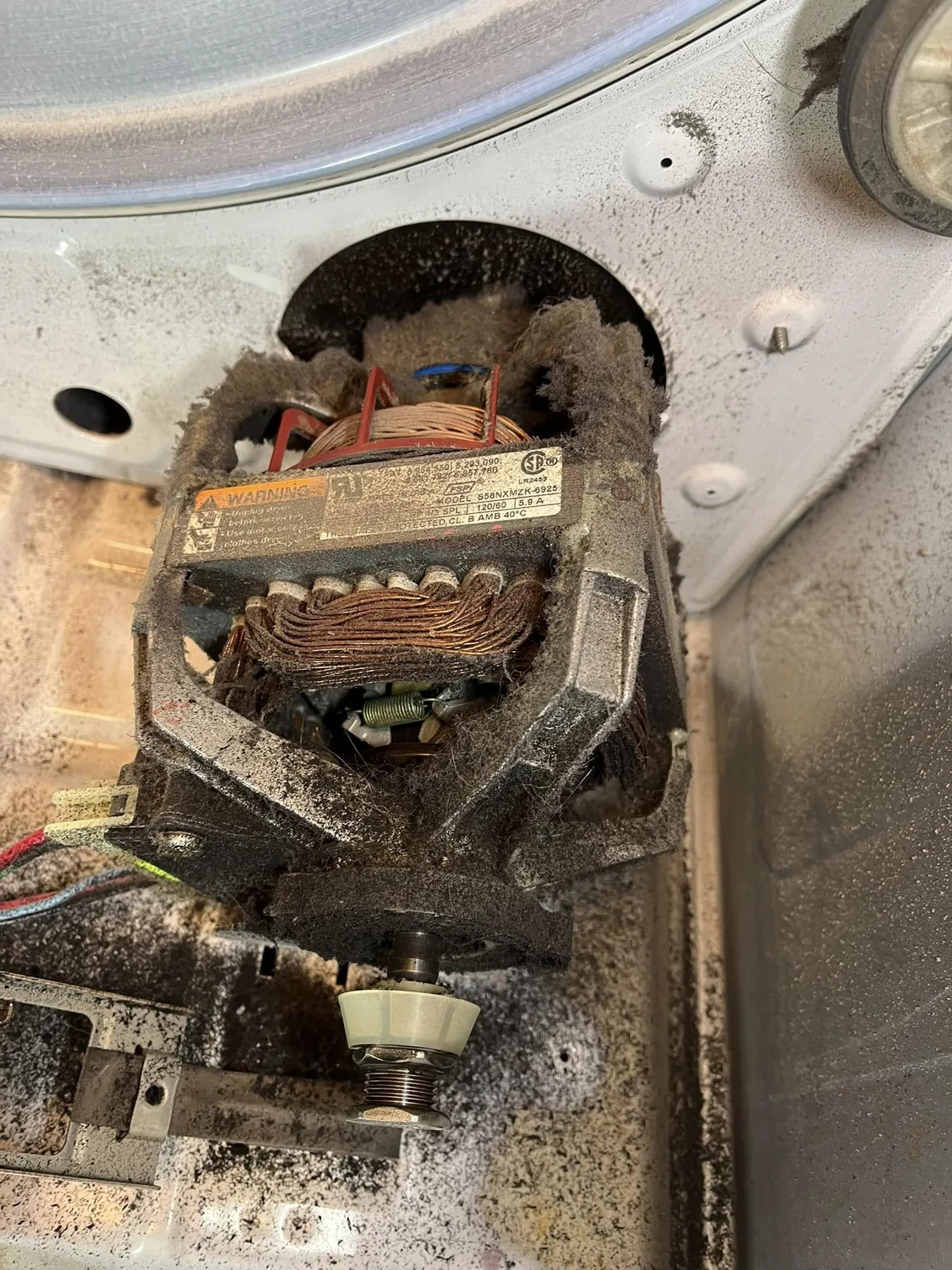
Lint, dust and restricted airflow can contribute to dryer performance problems
Some appliance issues are made worse by buildup over time. Cleaning filters and vent paths will not solve every breakdown, but it can reduce avoidable problems and give better information before service.
Photo example: dryer drive motor area with heavy lint buildup.
What Do Brands and Model Numbers Mean for Repair?
The brand, model number and serial number identify what you own. They determine which replacement part applies and whether the appliance has model-specific behavior.
Have these ready when you make contact:
- The manufacturer’s name
- The complete model number, including letters and dashes
- The serial number
- The location of the label, if you are unsure where to find it
The Brands page explains how brand and model compatibility works and where each appliance keeps its label.
Where Does Palmetto Crest Appliance Repair Serve Around Spartanburg?
Palmetto Crest Appliance Repair is centered on Spartanburg, South Carolina, and Spartanburg County. If you live on the Westside, the Eastside, or anywhere else in Spartanburg, the guidance below applies to you.
The site also has dedicated pages for nearby communities:
Greer, SC
Service context for Greer homeowners.
Boiling Springs, SC
Service context for Boiling Springs homeowners.
Inman, SC
Service context for Inman homeowners.
Duncan, SC
Service context for Duncan homeowners.
Each area page explains service context for that community, and the Service Areas page lists them all. If you live outside these communities, use the contact page to ask whether your address is in the service area. Scheduling and availability are confirmed directly when you get in touch.
What Should You Expect From an Appliance Repair Technician Visit?
Every visit differs, but an appliance repair technician should follow a familiar pattern.
- Confirm the problem. The technician asks what you have noticed and reviews any error codes.
- Inspect the appliance. Safe access to the appliance and its connections is needed.
- Test and identify. The likely systems are checked in a logical order.
- Explain findings. You hear what was found and what it means.
- Discuss options. Repair, further testing or replacement are weighed with you.
- Decide together. You choose whether to go ahead.
See the Service Process page for the general flow, and ask about scheduling details when you request service.
Where Can You Learn More Before You Call?
The Appliance Repair Resources section holds symptom-led guides written for homeowners. They explain what may be involved, what to check safely and when to stop and get help.
Useful starting points:
Appliance Repair FAQs for Spartanburg Homeowners
What does Palmetto Crest Appliance Repair fix?
Refrigerators, freezers, ice makers, refrigerator water filters, washing machines and dryers, dishwashers, ovens, stoves, cooktops, convection microwaves, range hoods, trash compactors and general household appliance problems.
How do I find my appliance’s model number?
Look for a label inside the door frame, along a side edge, behind a kick plate or on the back panel. The Brands page lists common label locations by appliance.
Can you tell me what is wrong from a description alone?
Not reliably. A description narrows the possibilities, but a symptom is not a diagnosis. Inspection and testing identify the cause.
Is it worth repairing an older appliance?
It depends on the problem, the appliance and the cost. Repair or Replace? sets out a practical framework.
What should I do if my refrigerator stops cooling?
Keep the doors closed as much as possible, check that the appliance has power and gather details for Refrigerator Repair. Follow food-safety guidance for perishable items.
What if I smell gas or burning?
Stop using the appliance. For a gas smell, leave the area and contact your gas utility or emergency services from a safe location. For a burning smell, turn the appliance off and unplug it only if it is safe.
Do you serve areas outside Spartanburg?
The site has pages for Greer, Boiling Springs, Inman and Duncan. See Service Areas and confirm your address through the contact page.
How do I schedule appliance repair?
Use the contact page. Include your appliance type, brand, model number and a short description of the problem.
Where Is Palmetto Crest Appliance Repair Located?
Palmetto Crest Appliance Repair serves the Spartanburg area from 410 Westbrook Ct, Spartanburg, SC 29303.
- Website: applianceinspartanburg.com
- Email: support@applianceinspartanburg.com
- Address: 410 Westbrook Ct, Spartanburg, SC 29303
- Phone: (864) 310-7300
For location-specific coverage, see the Service Areas page.
Ready to Schedule Appliance Repair in Spartanburg?
If an appliance in your Spartanburg-area home is not working the way it should, Palmetto Crest Appliance Repair can help you understand the problem and decide what to do next.
Start with the details: the appliance, the model number, the symptom and anything unusual you noticed. Then reach out through the contact page.
Not sure which page fits? Browse the appliance services above, read the Service Process or explore the Resources library first.